

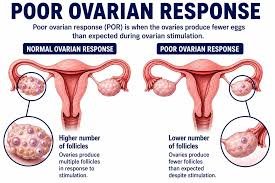

IVF has brought hope to millions of couples struggling with infertility. However, the success of IVF depends on several factors, including egg quality, sperm health, embryo development, and the response of the ovaries to fertility medications.
Some women undergoing IVF may experience poor ovarian response, where the ovaries produce fewer eggs than expected despite stimulation. While this condition can make treatment more challenging, advances in reproductive medicine have created new possibilities for improving outcomes.
What Is Poor Ovarian Response?
During IVF, fertility medications are given to stimulate the ovaries to produce multiple eggs. In women with poor ovarian response, the ovaries do not produce enough mature follicles even after stimulation.
This may result in fewer eggs being retrieved, which can affect the number of embryos available for transfer or freezing.
Causes of Poor Ovarian Response
Poor ovarian response can occur due to various reasons, including:
- Increasing maternal age, especially after 35 years
- Reduced ovarian reserve
- Previous ovarian surgeries
- Certain genetic factors
- Endometriosis affecting ovarian function
- Previous chemotherapy or medical treatments
- Low levels of Anti-Müllerian Hormone (AMH)
Age is one of the most important factors because both the quantity and quality of eggs naturally decline over time.
How Is Poor Ovarian Response Diagnosed?
Before starting IVF, fertility specialists evaluate ovarian reserve through:
- AMH blood test
- Antral follicle count through ultrasound
- Hormonal evaluation
- Medical history assessment
These tests help doctors understand how the ovaries are likely to respond to stimulation and plan treatment accordingly.
Treatment Options for Poor Ovarian Response
- Individualised IVF Protocols
A standard IVF approach may not work for every woman. Doctors may modify stimulation protocols, adjust medication doses, or change the timing of treatment based on ovarian response.
- Pre-Treatment Optimisation
Improving overall health before IVF may support better outcomes. Balanced nutrition, maintaining a healthy weight, managing stress, and correcting vitamin deficiencies can be beneficial.
- Use of Advanced Stimulation Techniques
In selected cases, fertility specialists may use specialised stimulation methods designed to maximise egg development. The approach depends on ovarian reserve and previous IVF response.
- Accumulation of Eggs or Embryos
For some women, collecting eggs over multiple cycles and combining them later may be considered to increase the chances of having suitable embryos.
- Considering Donor Eggs in Certain Cases
When ovarian reserve is severely reduced and repeated attempts have not resulted in success, donor egg IVF may be discussed as an alternative option.
The Importance of Expert Fertility Guidance
Poor ovarian response requires careful planning rather than a one-size-fits-all approach. Understanding the reason behind reduced egg production helps doctors create a realistic and personalised treatment strategy.
Dr Soumya Dash, the Best gynaecologist in Bhubaneswar, focuses on advanced fertility management and provides comprehensive guidance to couples dealing with complex IVF challenges. With proper evaluation and customised treatment plans, many couples can continue their journey towards parenthood with renewed hope.
Conclusion
Poor ovarian response can be emotionally and medically challenging, but it does not mean the end of the fertility journey. Advances in IVF techniques, improved diagnostics, and personalised treatment approaches have opened new possibilities for women with reduced ovarian response. Early consultation with a fertility specialist can help identify the best path forward.
 t commonly searched causes of infertility today, with thousands of women asking online: “Can I get pregnant with endometriosis?” For many, the journey leads to IVF (In Vitro Fertilization)—a treatment that offers hope, but also raises important questions.
 A miscarriage can be one of the most painful experiences in a couple’s fertility journey. Along with emotional grief, it often brings fear, confusion, and unanswered questions about the future. Many couples searching online ask the same question: “Can IVF help after a miscarriage?”